


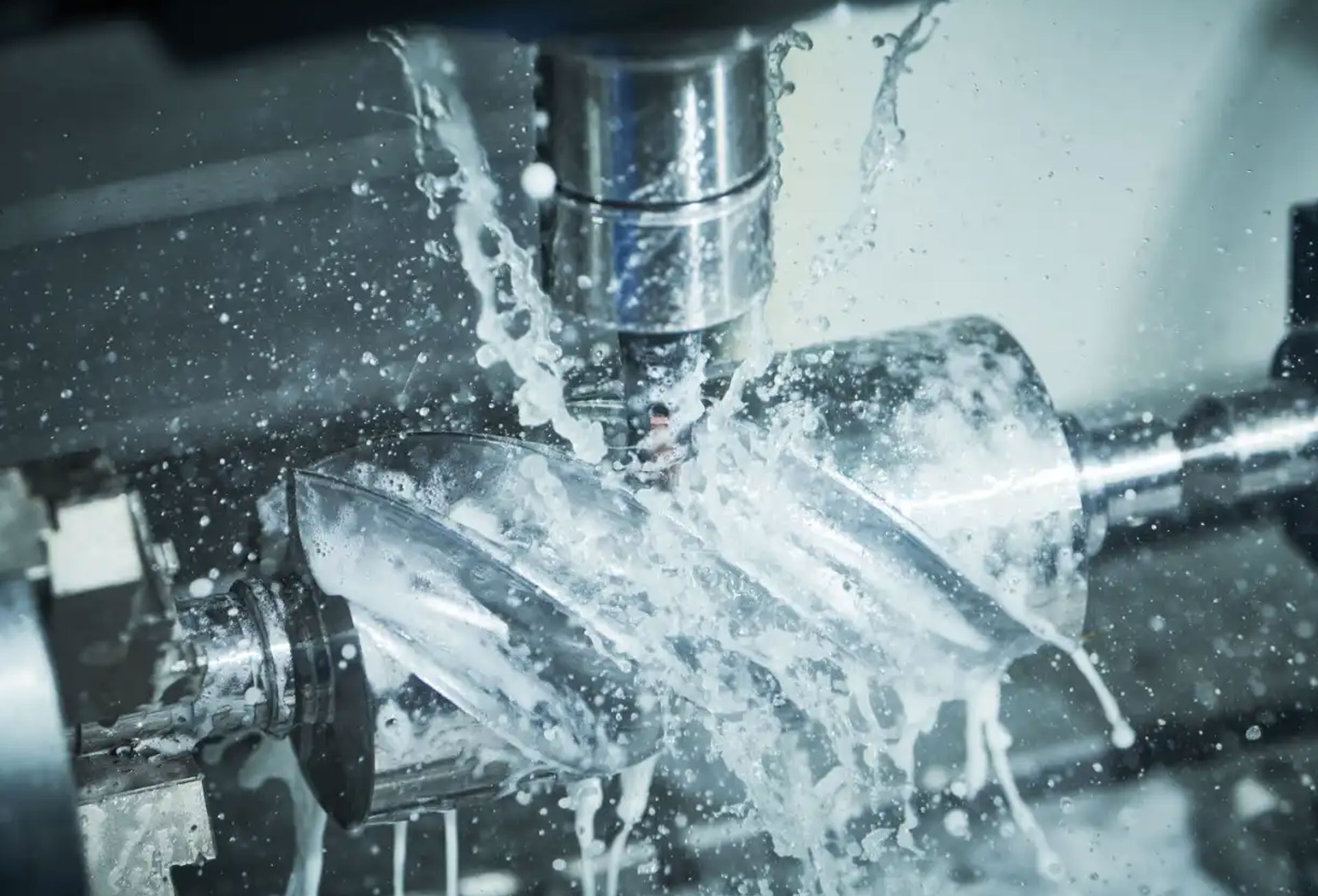
The milling process is a machining operation in which a rotating multi-point cutting tool (called a milling cutter) removes material from a workpiece to produce the desired shape, size, and surface finish. It is one of the most commonly used manufacturing processes in both conventional and CNC (Computer Numerical Control) machining.
In milling, the workpiece is firmly clamped on a movable table, and the cutting tool rotates at high speed. The table can move in multiple directions — typically along the X, Y, and Z axes — allowing the cutter to engage with the workpiece from different angles. This controlled movement makes it possible to produce complex shapes, slots, holes, contours, and threads with high precision.
Milling can be performed on a wide range of materials including metals, plastics, composites, and wood. The process parameters such as cutting speed, feed rate, and depth of cut are adjusted depending on the material and desired surface quality.
Depending on the tool movement and setup, milling operations can also include:
- End Milling: Producing slots, pockets, or profiles using end mills.
- Straddle Milling: Simultaneous machining of two parallel surfaces.
- Angular Milling: Creating angled surfaces using single-angle or double-angle cutters.
- Form Milling: Producing complex shapes such as contours or curves using form cutters.
- Gang Milling: Using two or more cutters mounted on the same arbor for simultaneous operations.